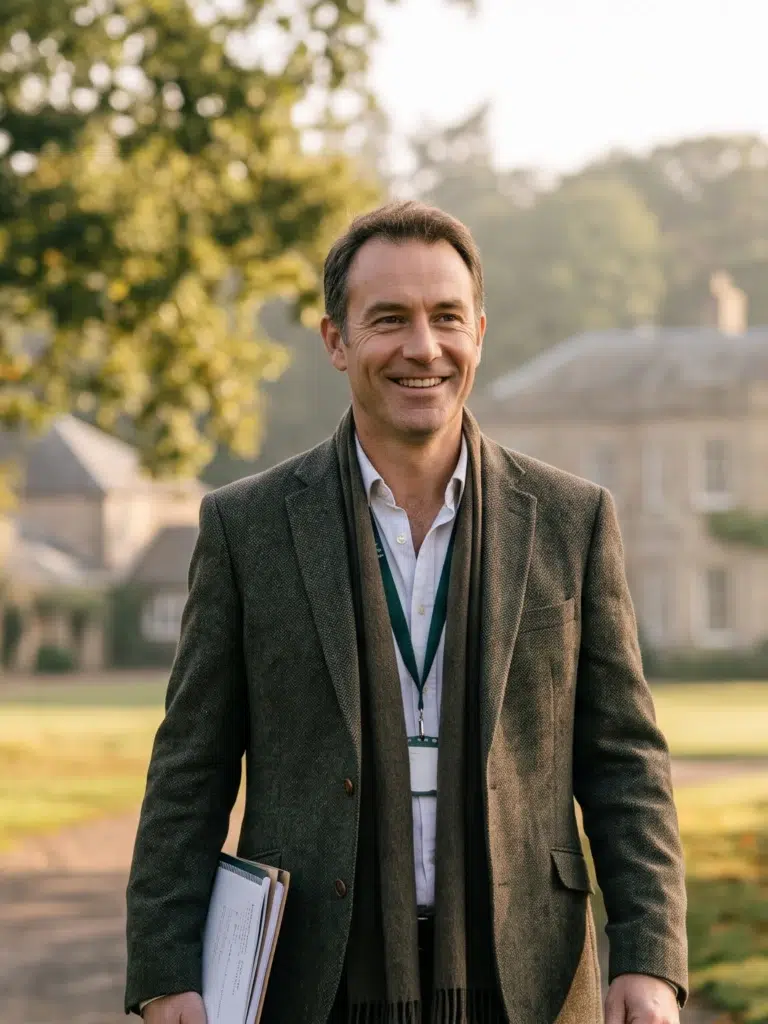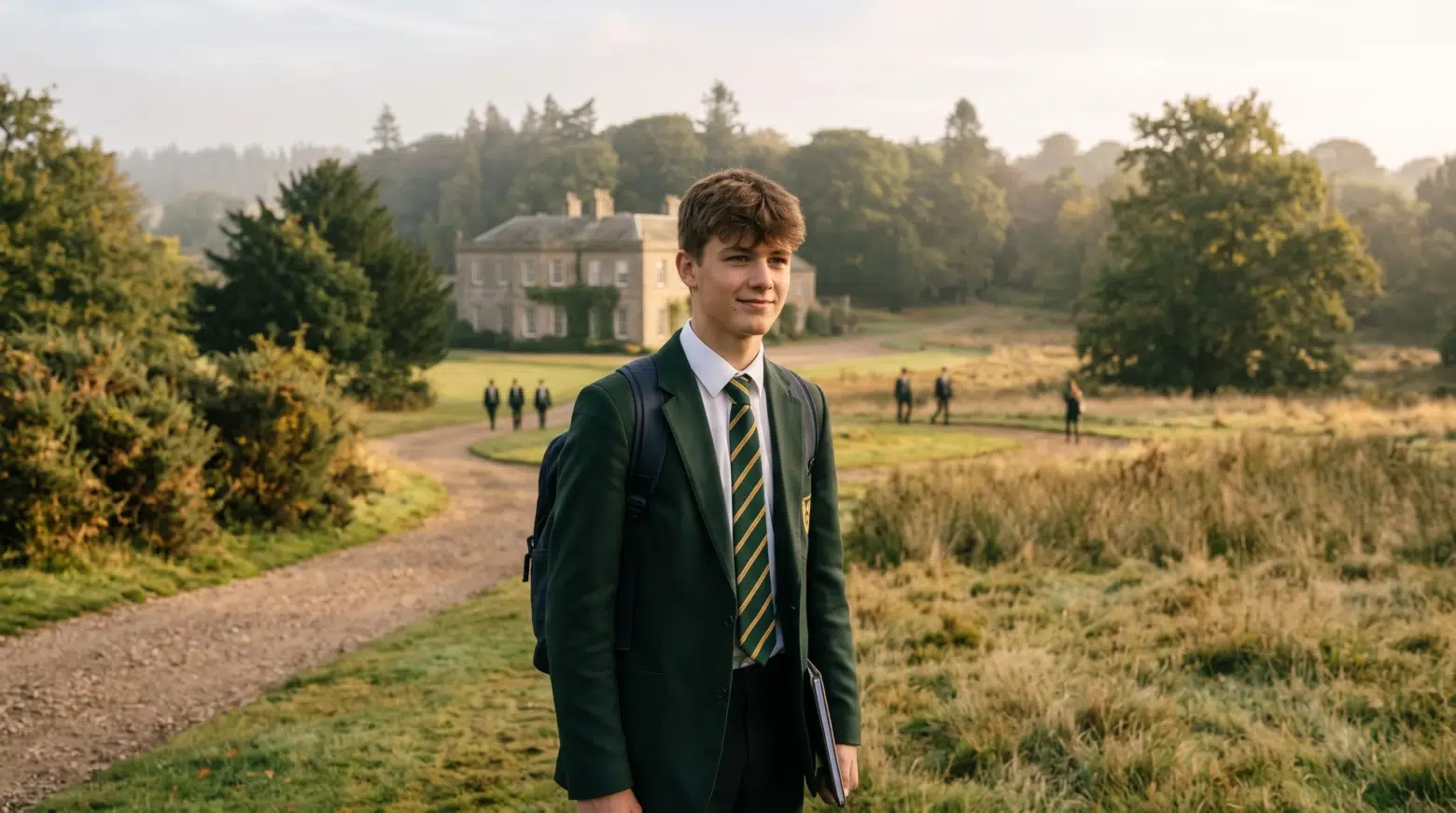
The Senior School curriculum at Brackenmoor covers Years 7 to 11 and leads to GCSE. Pupils study a broad range of subjects lower down the school, then narrow their choices for Years 10 and 11.
Lessons are taught by subject specialists in their own departments. Pupils move between teaching rooms, laboratories, art studios and the sports hall during the week, so the timetable feels different from Prep from the first day.
Settling into Year 7
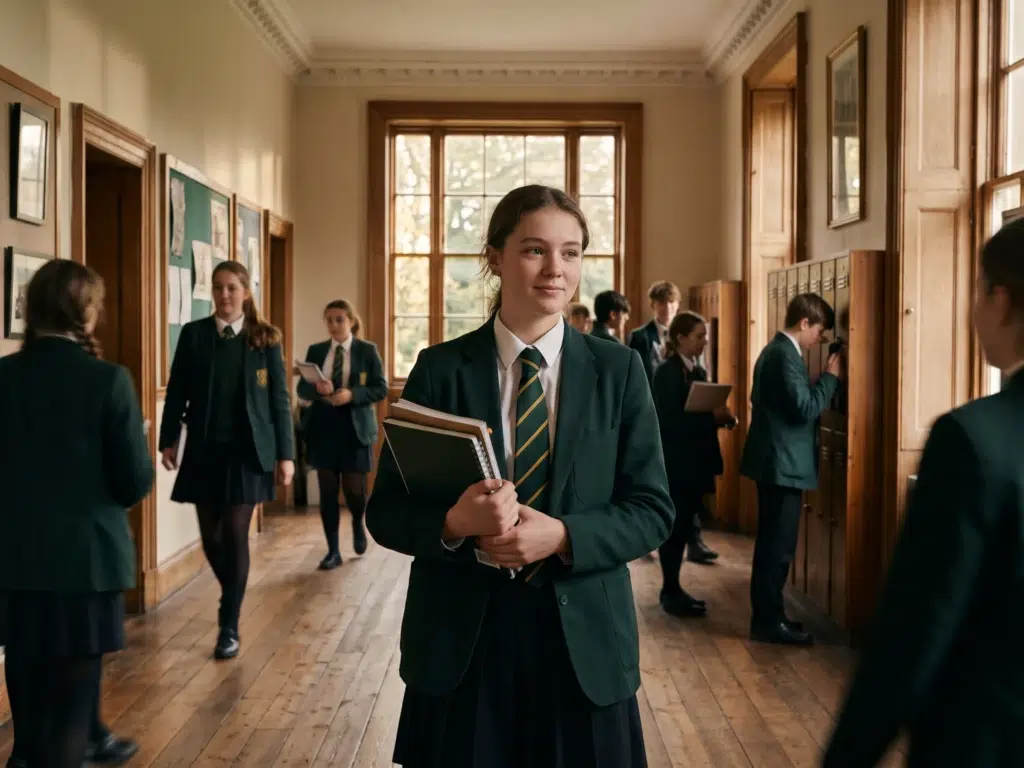
Year 7 is the year for finding your feet. Pupils get to know a wider staff team, learn to organise books and homework for several subjects, and work with older pupils through reading and mentoring.
Many arrive from Upper Prep and already know the site well. Others join from other schools, and the first half of the autumn term is planned around helping both groups settle.

Choosing GCSE subjects
Before the GCSE years, pupils and parents meet subject staff to talk through what each course involves, how it is assessed and where it can lead. The aim is a balanced set of subjects that suits your child, not a standard package.
Results for recent years are published on the exam results page.
Subjects
English
English
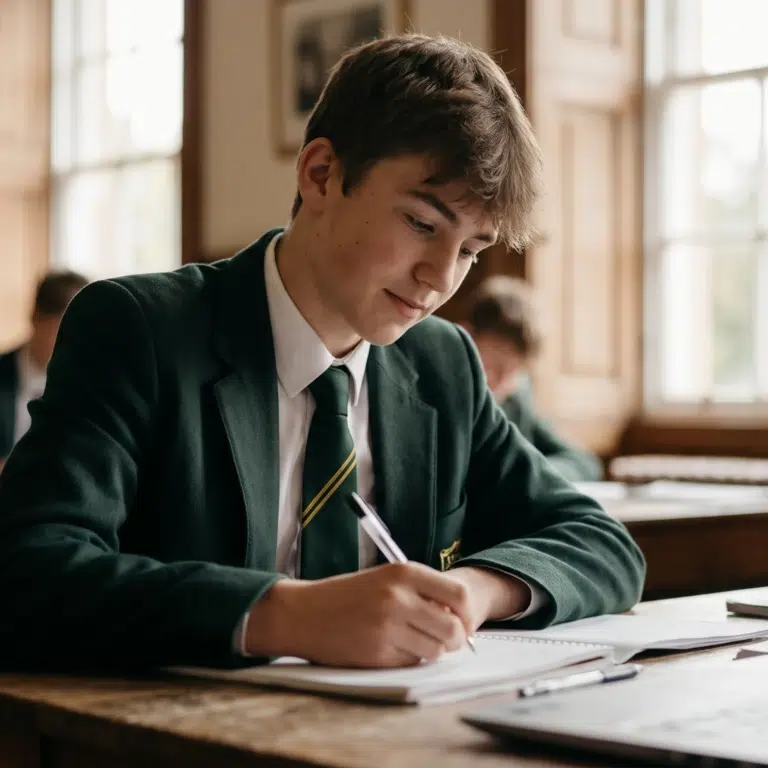
Pupils read a novel, a play and poetry every year, and write often, from short stories to persuasive essays. English Language and English Literature are both taken at GCSE. Theatre trips, author visits and the Year 8 public speaking competition take the subject beyond the classroom.
Mathematics
Mathematics
Maths is taught in sets from Year 7, so pupils can move at the right pace and be stretched when they are ready. All pupils take GCSE Mathematics, and the strongest mathematicians can also take Further Maths. Maths Clinic runs every Wednesday lunchtime for anyone who wants help.
Science
Science
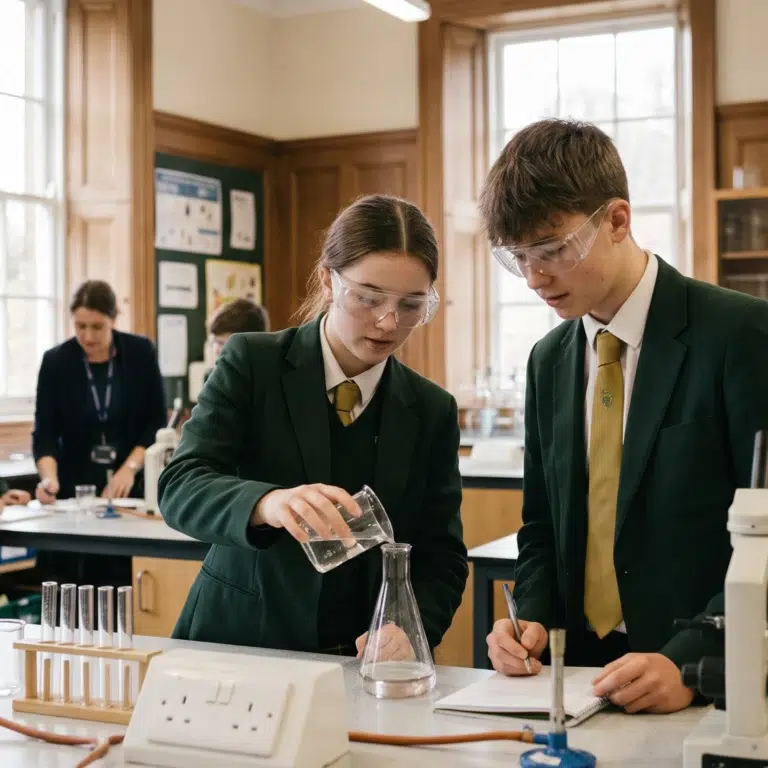
Biology, Chemistry and Physics are taught by specialists from Year 7, in the Ashby Centre’s 14 laboratories. Pupils take either three separate sciences or Combined Science at GCSE. The physics department has a telescope on the roof, used by the astronomy club on winter evenings.
Modern Languages
Modern Languages
All pupils learn French and Spanish in Year 7, then choose at least one to continue. Lessons are taught in small groups, with plenty of speaking. The Year 9 exchange to Normandy and the Year 10 trip to Salamanca give pupils the chance to use what they have learned.
History
History
History runs from the Norman Conquest to the 20th century, with a local history project on Hertfordshire in Year 8. Pupils learn to weigh up sources and argue a case in writing. GCSE History is an option, and Year 10 visit the First World War battlefields in Belgium.
Geography
Geography
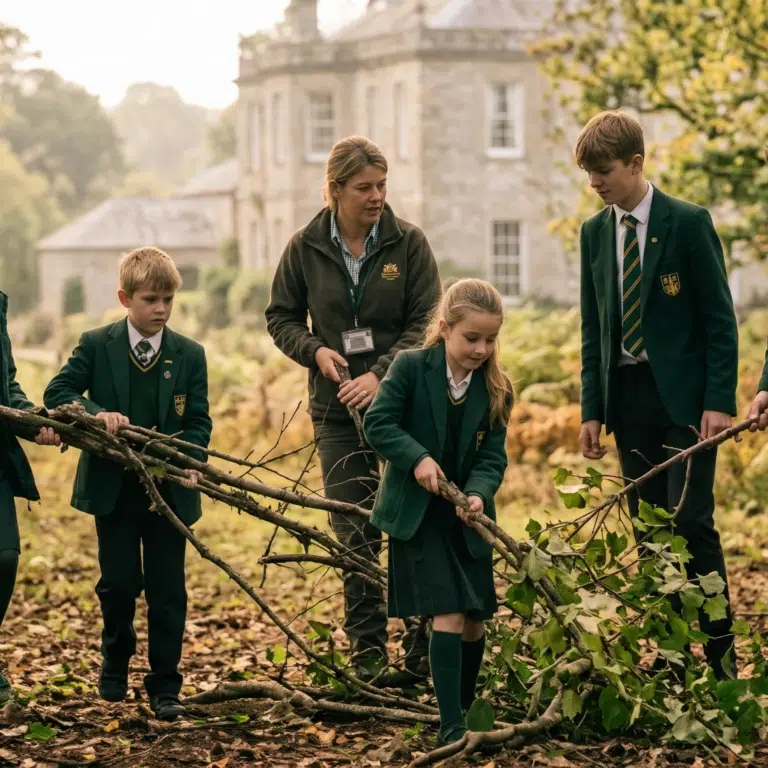
Geography covers rivers, cities, climate and the way people use the land. Pupils carry out fieldwork every year, starting in the Woodland Learning Campus in Year 7 and finishing with a GCSE field trip to the Yorkshire coast. Map skills and data are part of every topic.
Computing
Computing
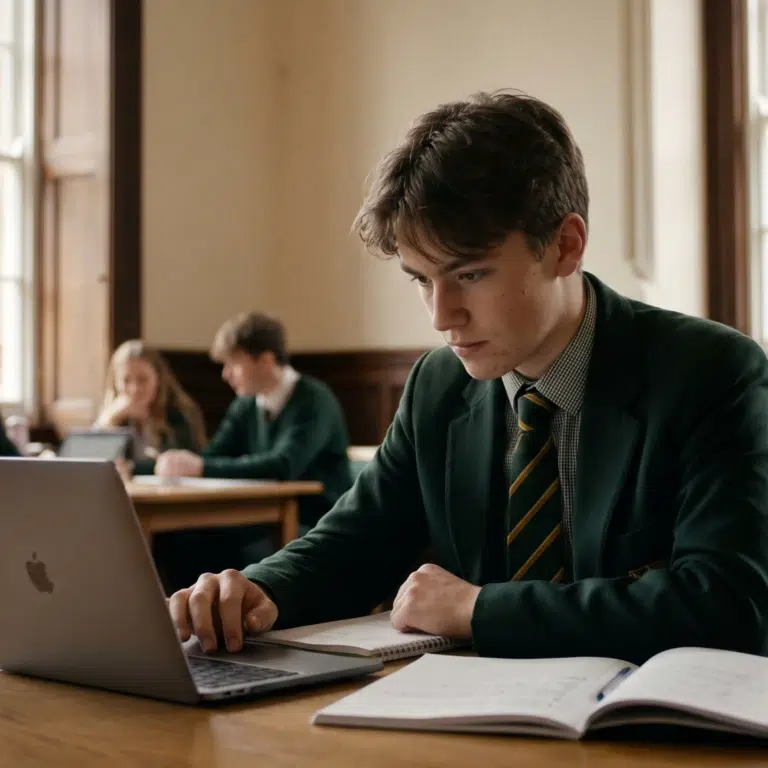
Pupils learn to code from Year 7, starting with block-based programming and moving on to Python. They also learn how computers and networks work and how to stay safe online. GCSE Computer Science is an option, and the coding and robotics club meets twice a week.
Art & Design
Art & Design
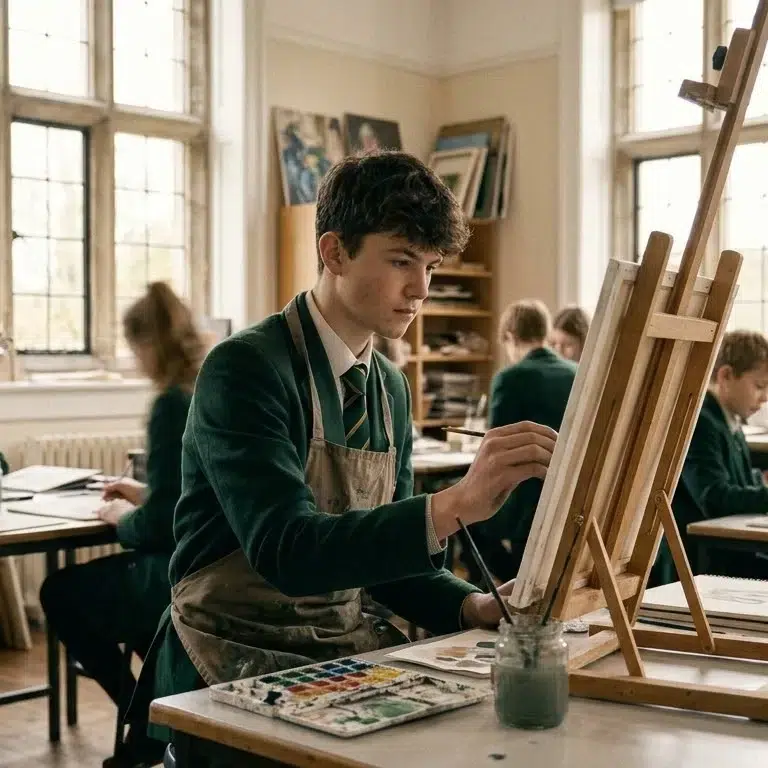
Pupils draw, paint, print and sculpt, working in the art studios with a kiln and a darkroom. Sketchbooks go with them from Year 7 to GCSE. Every summer, work from across the school goes on show at the Summer Exhibition.
Music
Music
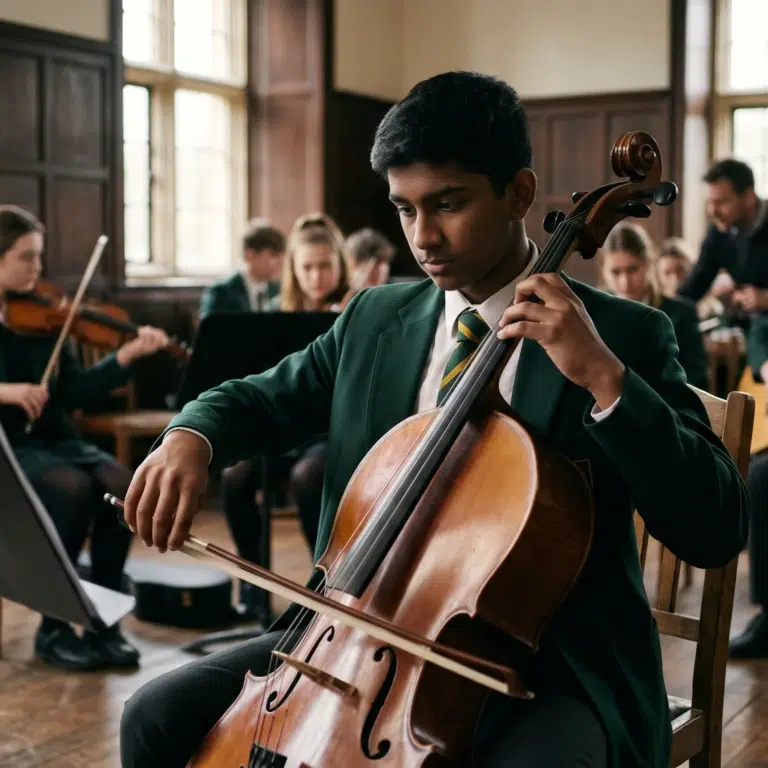
Every pupil sings, plays and composes in Years 7 to 9. Many learn an instrument with a visiting teacher, and ensembles rehearse in the Pryor Theatre each week. GCSE Music combines performing, composing and listening.
Physical Education
Physical Education
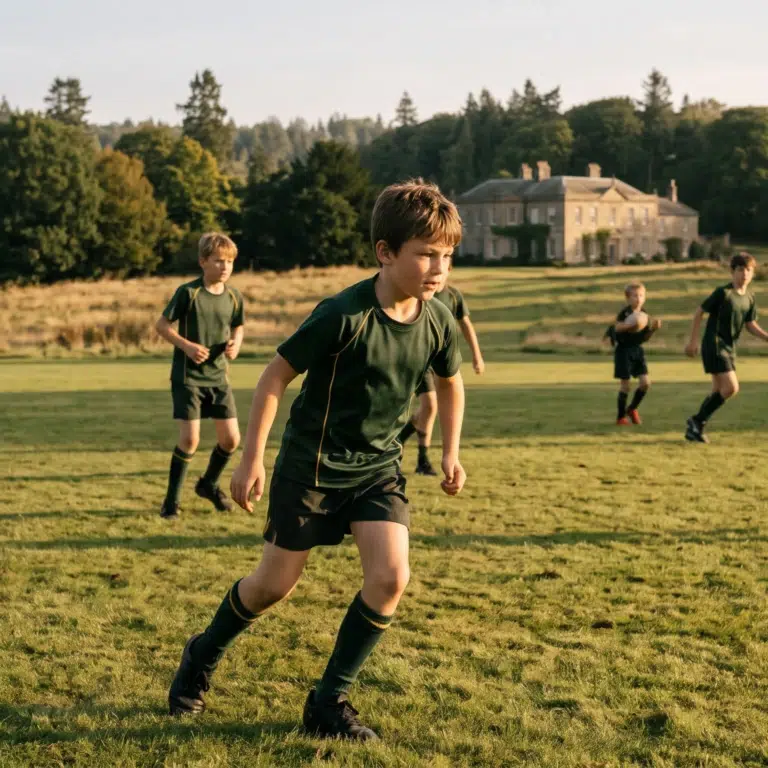
Pupils have PE and Games every week, with rugby, football, hockey, netball, cricket and athletics through the year. Fixtures are played on Wednesday and Saturday afternoons. GCSE PE is an option for those who want to study sport in more depth.
How does Brackenmoor keep track of my child’s progress?
Every pupil has a form tutor who sees them every morning and is the first person parents talk to. Tutors watch the whole picture: effort, organisation, friendships and how the week is going.
Subject teachers report on progress through the year, and parents’ evenings give time to talk face to face. If something slips, you hear about it early rather than at the end of term.
Pastoral support sits alongside the academic work. You can read more about how pupils are looked after on the pastoral care page.
Support and stretch
Small classes let teachers notice quickly when a pupil needs more help or more challenge. Support may be extra time with a subject teacher, a reading or spelling programme, or work set at a harder level in class.
The curriculum also runs beyond the timetable: clubs, trips, concerts, fixtures and competitions. Details are on the clubs and activities page.
Curriculum questions parents ask
How do I find out more about the Senior School curriculum?
The clearest picture comes from visiting Brackenmoor and talking to the staff who teach the subjects.
- Book a tour on a normal school day and see lessons in progress.
- Ask to meet a head of department if there is a subject your child cares about.
- Request the prospectus for an overview of the Senior School.
- Look at the exam results to see how recent pupils have done at GCSE.
- Contact the admissions team through the contact page with any questions left over.
Visits run on weekday mornings and there is no need to wait for an open morning.

See the curriculum at work
The best way to understand the Senior School curriculum is to watch a lesson. On a weekday tour you will see Year 7 in a science laboratory, a GCSE art group working towards a deadline, and pupils moving between subjects with their teachers.
Tours are led by pupils, so you can ask them what the work is really like. The Head is usually free to talk afterwards.